4. Model the ontology
The ontology translates underlying table schemas into objects, properties, links, metrics and actions — so apps and agents access data by business semantics.
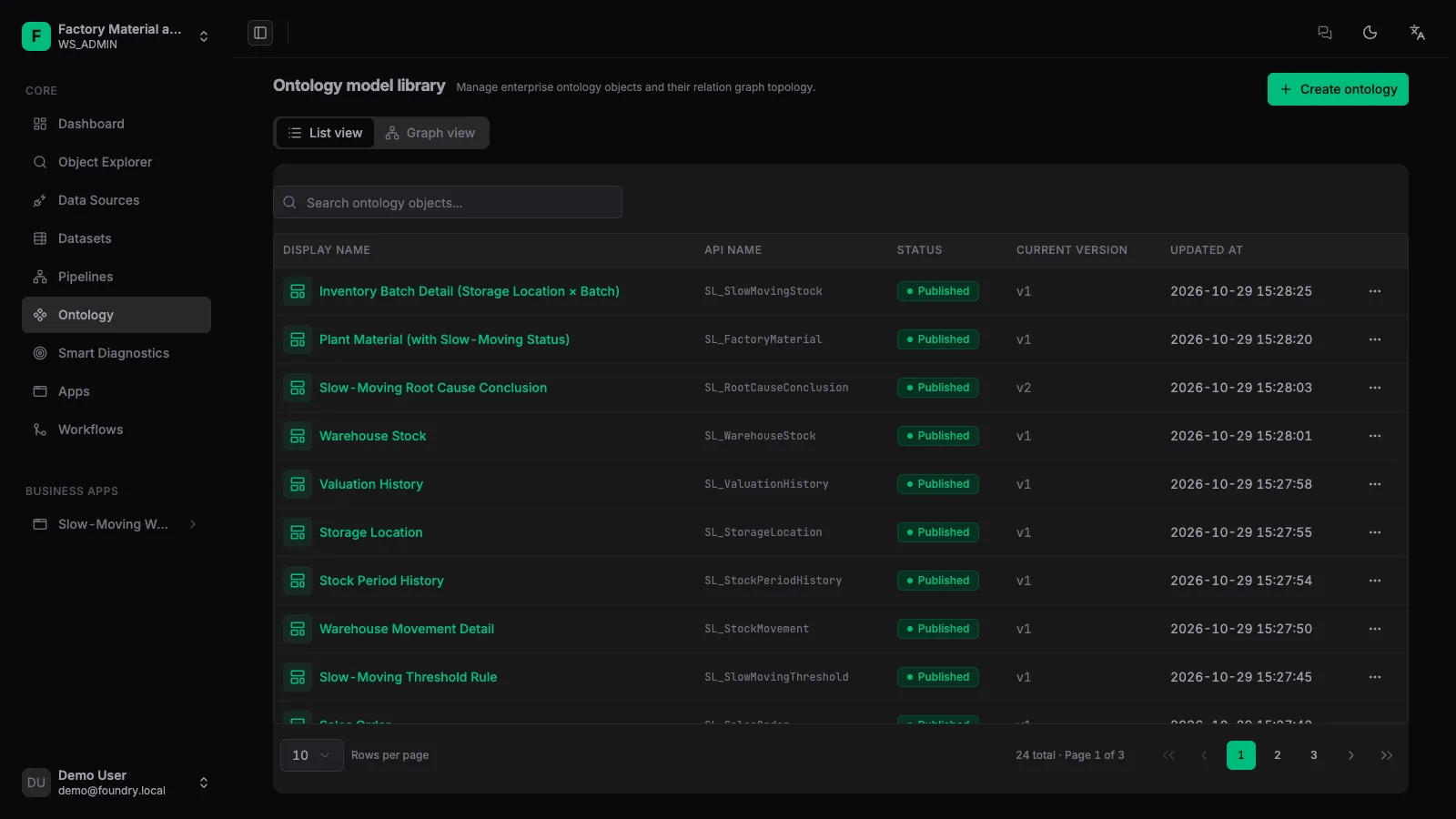
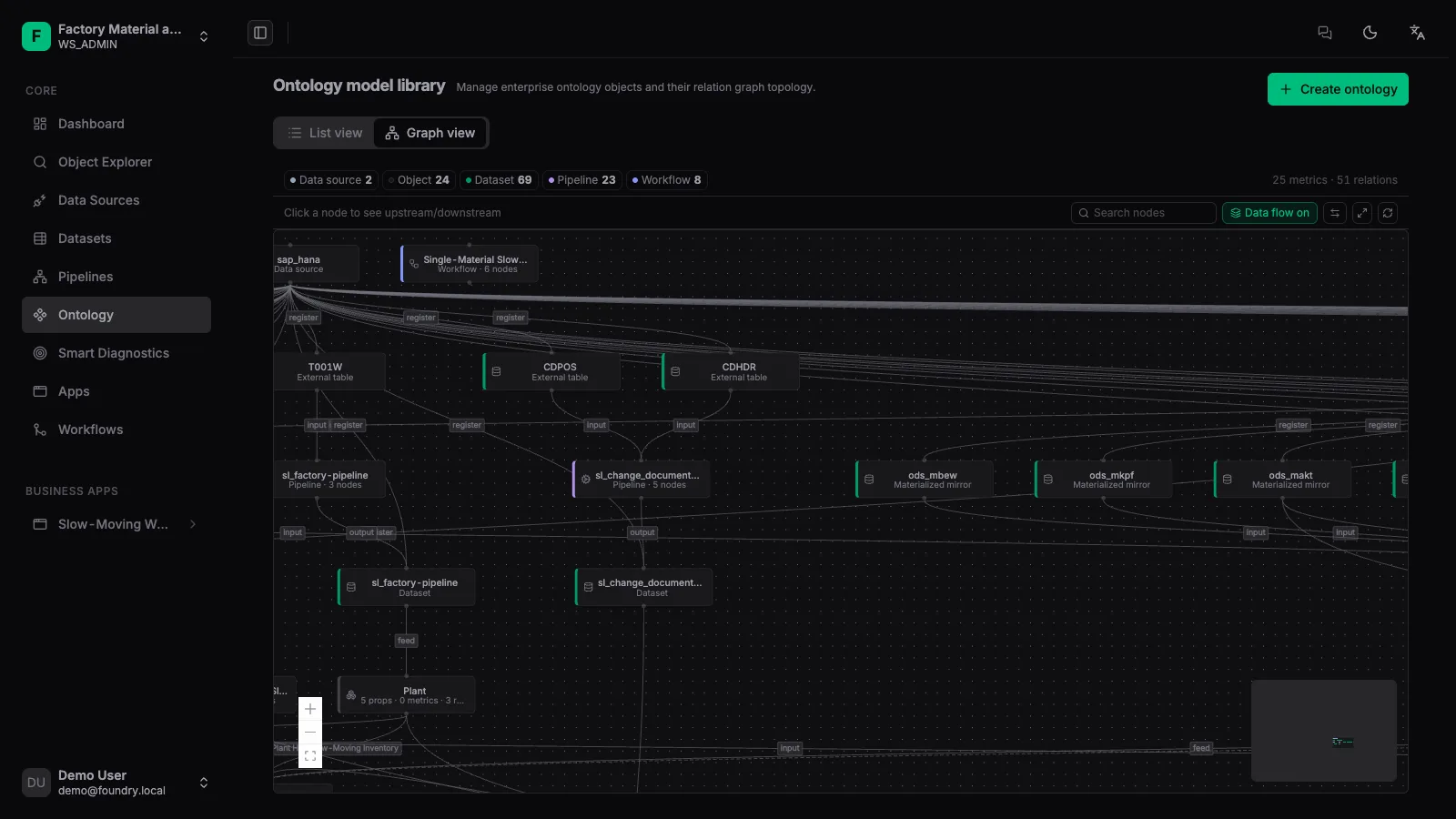
1. Create an object type
In [Ontology], create a new object, fill in its internal identifier and display name, bind the master dataset and choose a primary key.
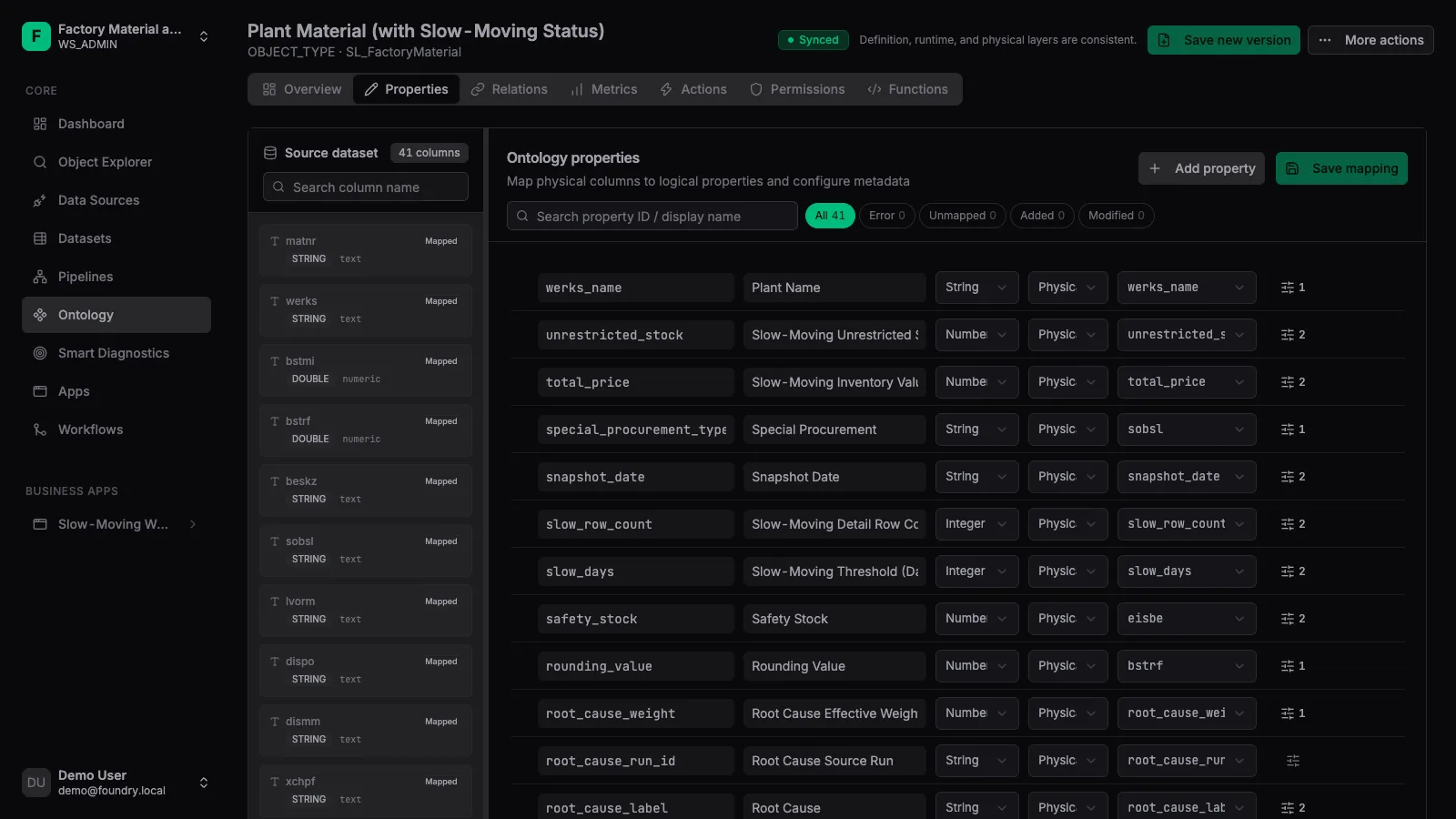
2. Map properties
Under [Properties], map physical columns to business attributes and configure type, search and sorting.
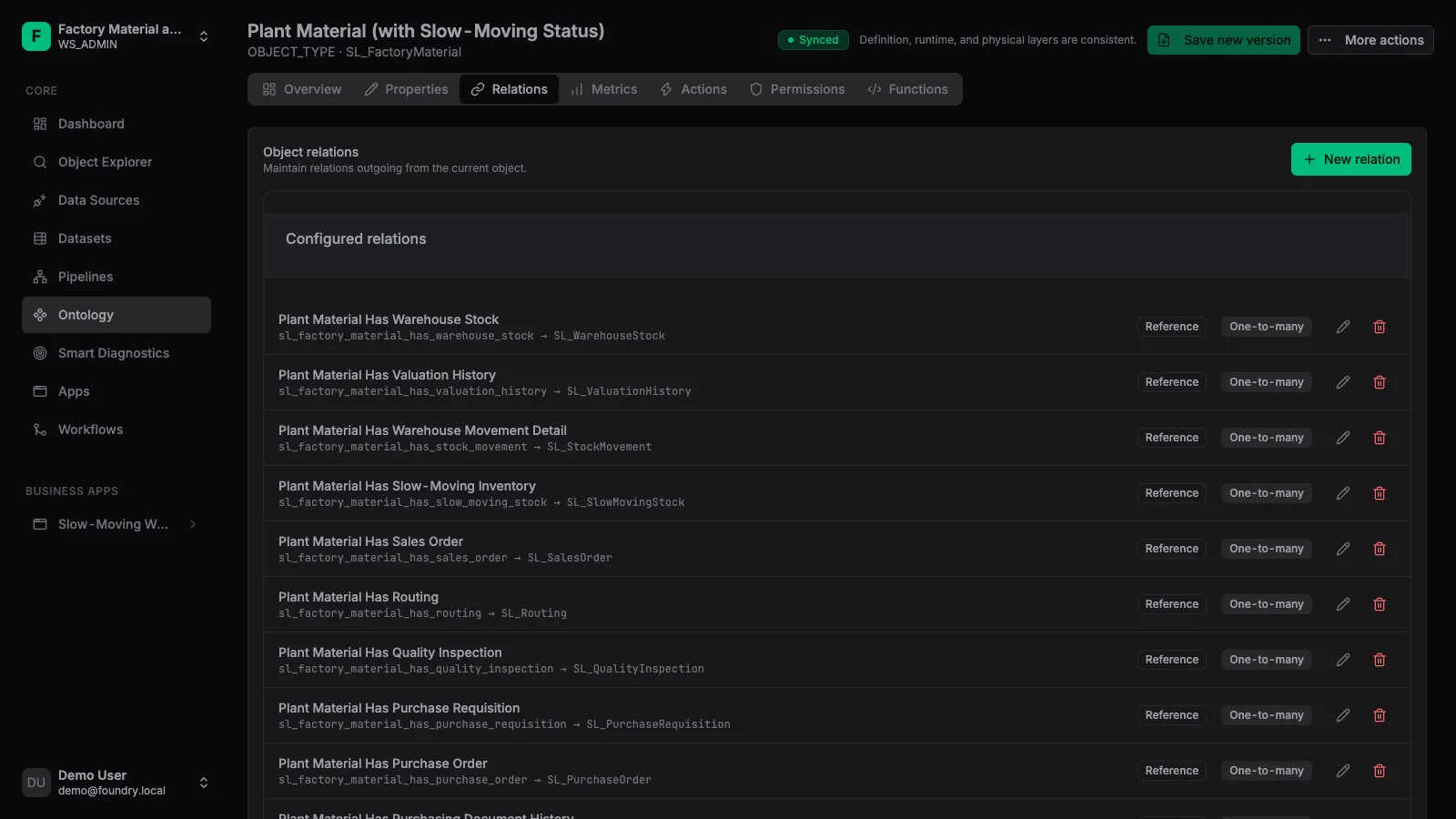
3. Define links
Under [Links], define cardinality and join conditions between objects — afterwards you can roam directly between objects.
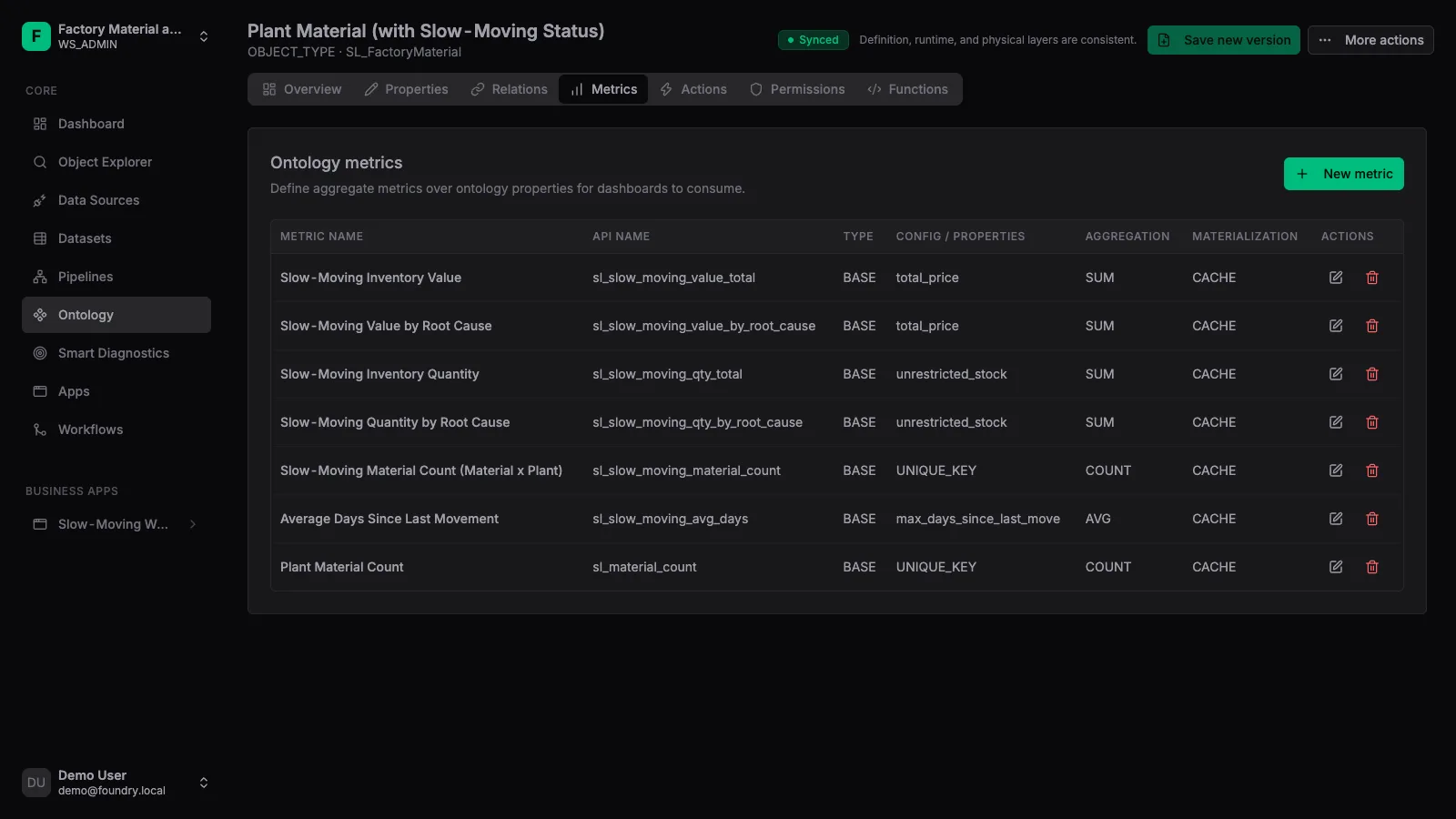
4. Define metrics
Under [Metrics], lock in aggregation criteria — e.g. amount totals, quantity totals and ratios.
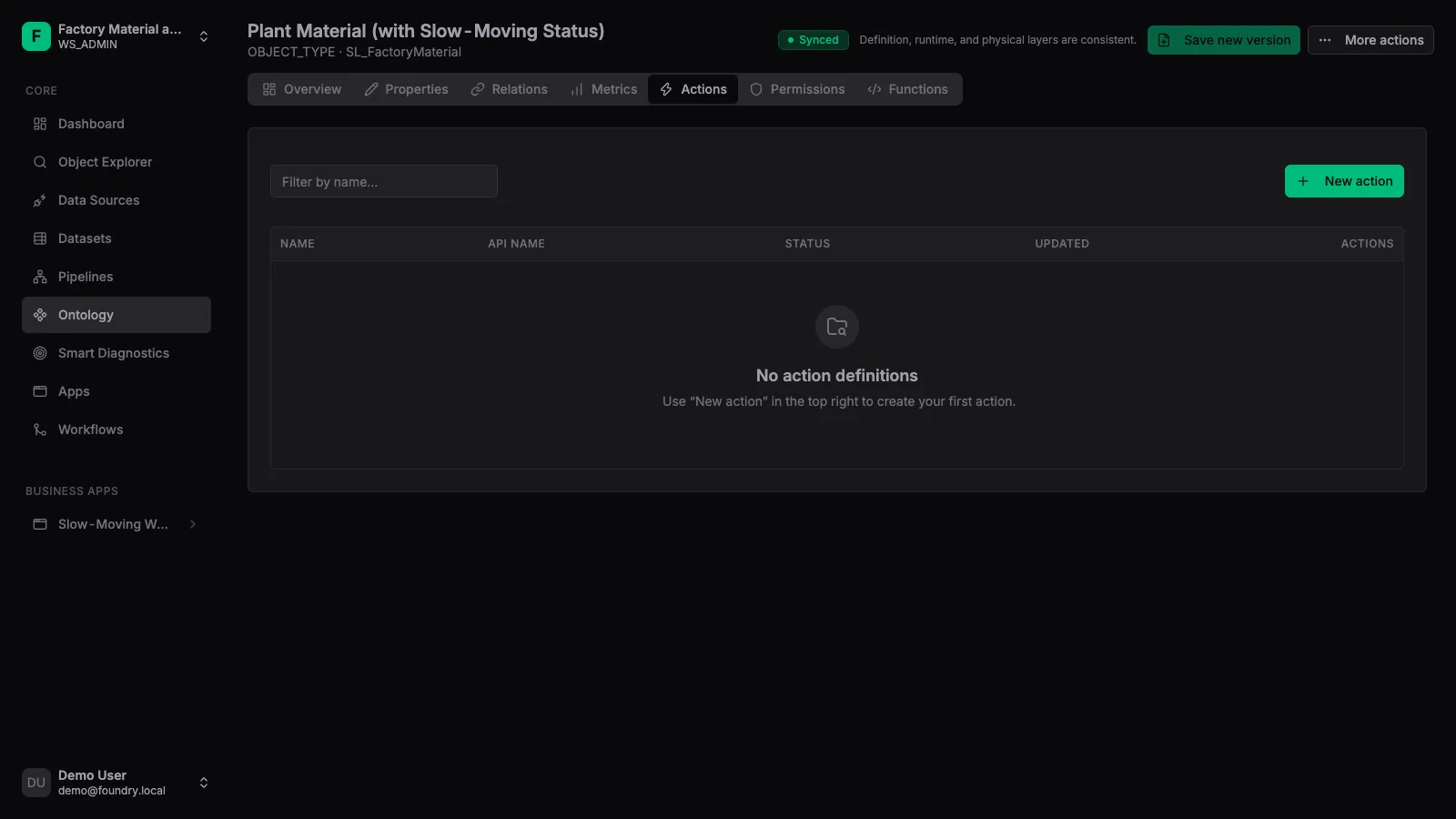
5. Define actions
Under [Actions], declare input parameters, validation rules and execution logic. All writes must go through actions.
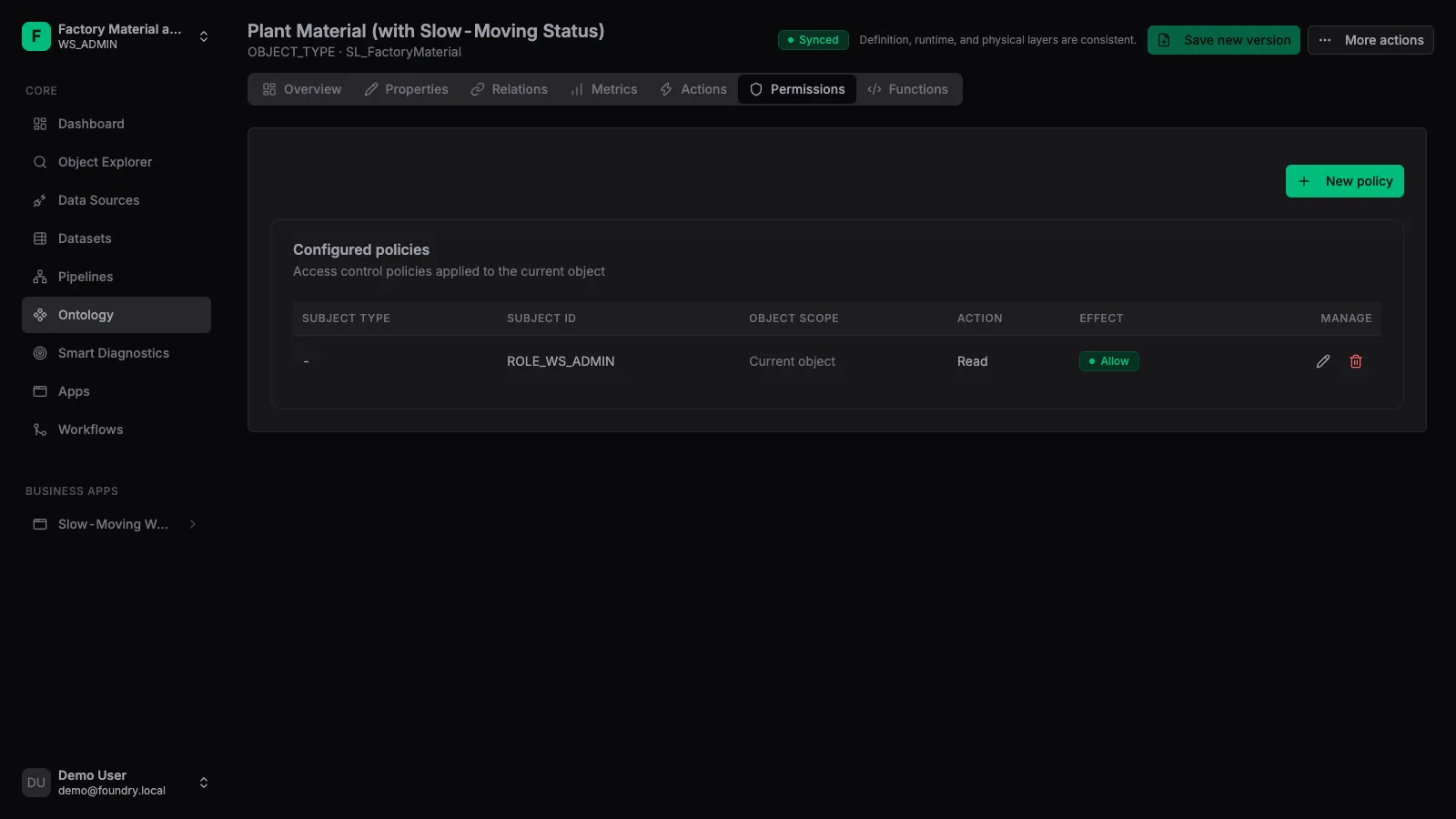
6. Configure rules & access
Use [Rules] to constrain state and data quality, and [Permissions] to control read/write scope and publishing; [Functions] host reusable computations.
External apps and agents can never execute UPDATE or DELETE against the underlying databases — every write must go through an action.